Active Recall vs Rereading: Why You Blank in the Exam
You reread your notes, felt ready, then blanked in the exam. What the research says about active recall vs rereading, and three ways to test yourself.
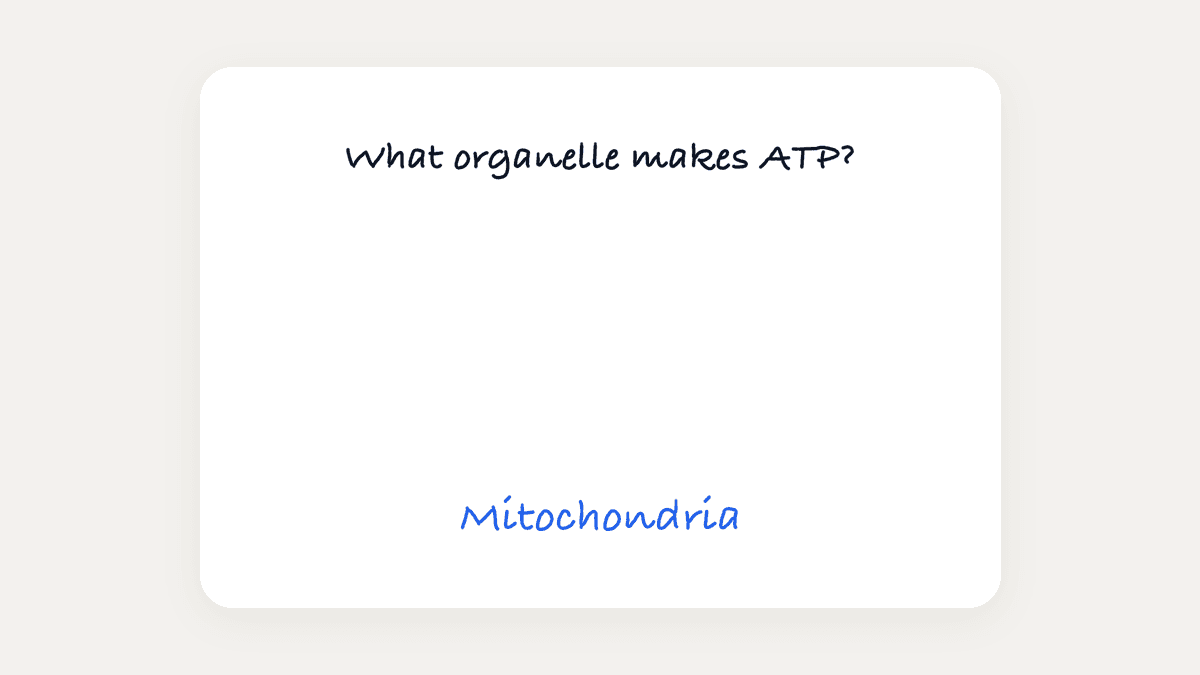
You reread and highlight your notes the night before, everything looks familiar, and you feel ready. Then the exam starts and your mind goes blank. Rereading shows you can recognize the page; the exam asks you to produce the answer without it. Active recall practices that: close your notes and answer from memory.
That trap has been measured. In one study, the students who read a passage four times felt the most confident, and a week later they remembered the least.
Here's what the research found, and three ways to test yourself from the notes you already have.
Why do you blank after rereading your notes?
Rereading feels like studying. Your notes are right there and the words look familiar. Every pass feels a little smoother than the last, so it feels like the knowledge is sinking in.
But the page is doing half the work. The headings and the colors you highlighted in keep hinting at what comes next. In the exam those hints are gone. The question is a blank line, and you have to pull the answer out of your own head.
Recognizing an answer and remembering it are two different skills, and rereading only practices the first.
Active recall (researchers call it retrieval practice, and the boost it gives the testing effect) means you practice the second one. Cover the answer, try to say or write it, then check.
What did the rereading study actually find?
In 2006, Henry Roediger and Jeffrey Karpicke gave 180 university students a short science passage to learn (one was about sea otters, the other about the sun). The students were split three ways, and each group had four back-to-back periods with the passage:
- read it four times
- read it three times, then wrote down everything they could remember
- read it once, then wrote down everything they could remember, three times in a row
Those recall tests were just a blank sheet of paper, and nobody was told what they got right or wrong.
Five minutes later, the rereaders were ahead: they recalled 83% of the passage's ideas, against 71% for the read-once group. If the exam were five minutes after studying, rereading would win.
A week later, it flipped. The read-once, tested-three-times group recalled 61%. The read-four-times group recalled 40%, even though they had read the passage about 14 times in total, compared with 3.4 times for the tested group.
Here's the surprising part. Right after studying, students rated how well they would remember the passage in a week. The read-four-times group was the most confident of the three. The authors put it plainly: repeated studying "inflated students' confidence". The students who felt most ready remembered the least.
That's the night before the exam in one experiment. Rereading gives you a short-term boost and a feeling of being ready, but the boost doesn't last.
Should you stop testing yourself on what you already know?
It's tempting. Once you get a flashcard right, why keep seeing it?
Karpicke and Roediger tested exactly that in 2008. Students learned 40 Swahili–English word pairs in a flashcard-style setup. Once a student recalled a pair, it was either kept in the tests or dropped from them. Some students still restudied every pair after it was dropped from testing.
A week later, the students who kept being tested recalled about 80% of the pairs. The students whose pairs were dropped from testing recalled 36% and 33%, including the ones who kept restudying everything. And every group predicted they would recall about half, whatever they had done. Their guesses had no link to how they actually did.
Getting it right once isn't the finish line. Keep testing yourself on it.
This isn't one lab's quirk. In 2013, John Dunlosky and colleagues reviewed the evidence on ten study techniques. Practice testing and spacing your study over time got the top rating. Rereading, highlighting and summarizing were among the techniques rated low, even though they are some of the most common ones students use.
How do you make flashcards from your own notes?
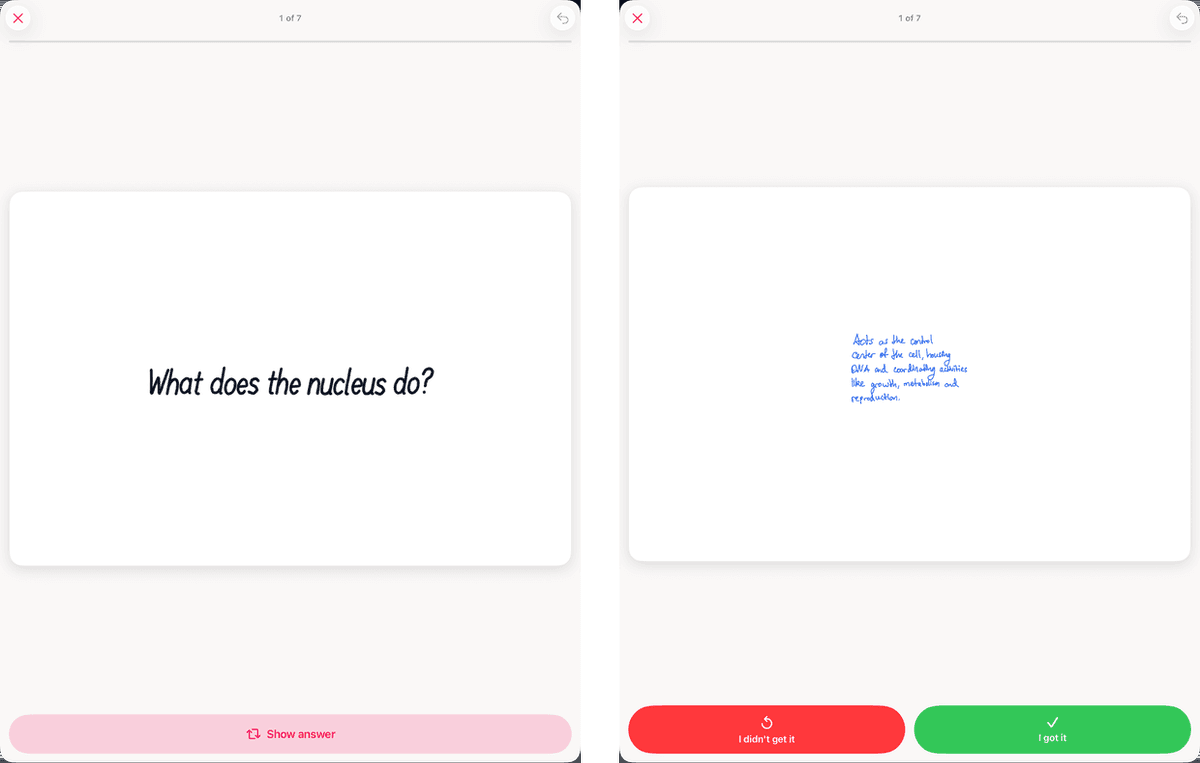
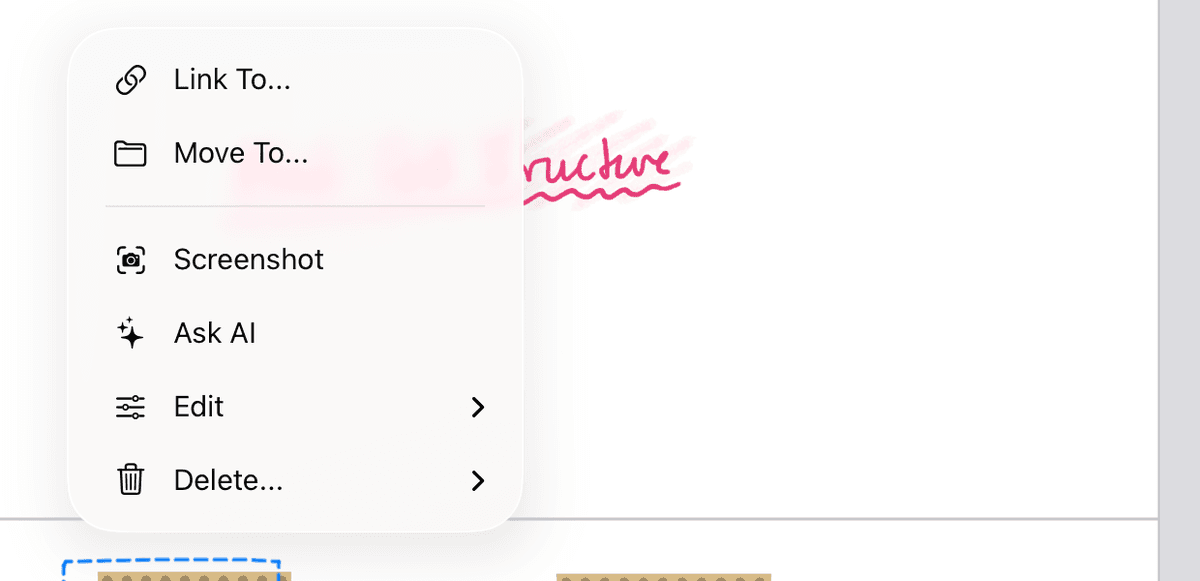
A simple way to test yourself is a deck of cards made from your own notes, and you don't have to rewrite anything. In Strawberry Notes, lasso the part you want to remember, tap Edit → Create Flashcard, and write the question on the front. Your handwriting goes onto the back exactly as you wrote it. The full steps are in How to turn handwritten notes into flashcards.
Then review: answer in your head, tap Show answer, and grade yourself with I didn't get it or I got it. Be honest, because the grade decides when the card comes back.
Cards you got right still come back, which is what the 2008 study says you want. They just come back further apart each time you get them. More on that in spaced repetition for students.
Can the AI quiz you on your notes?
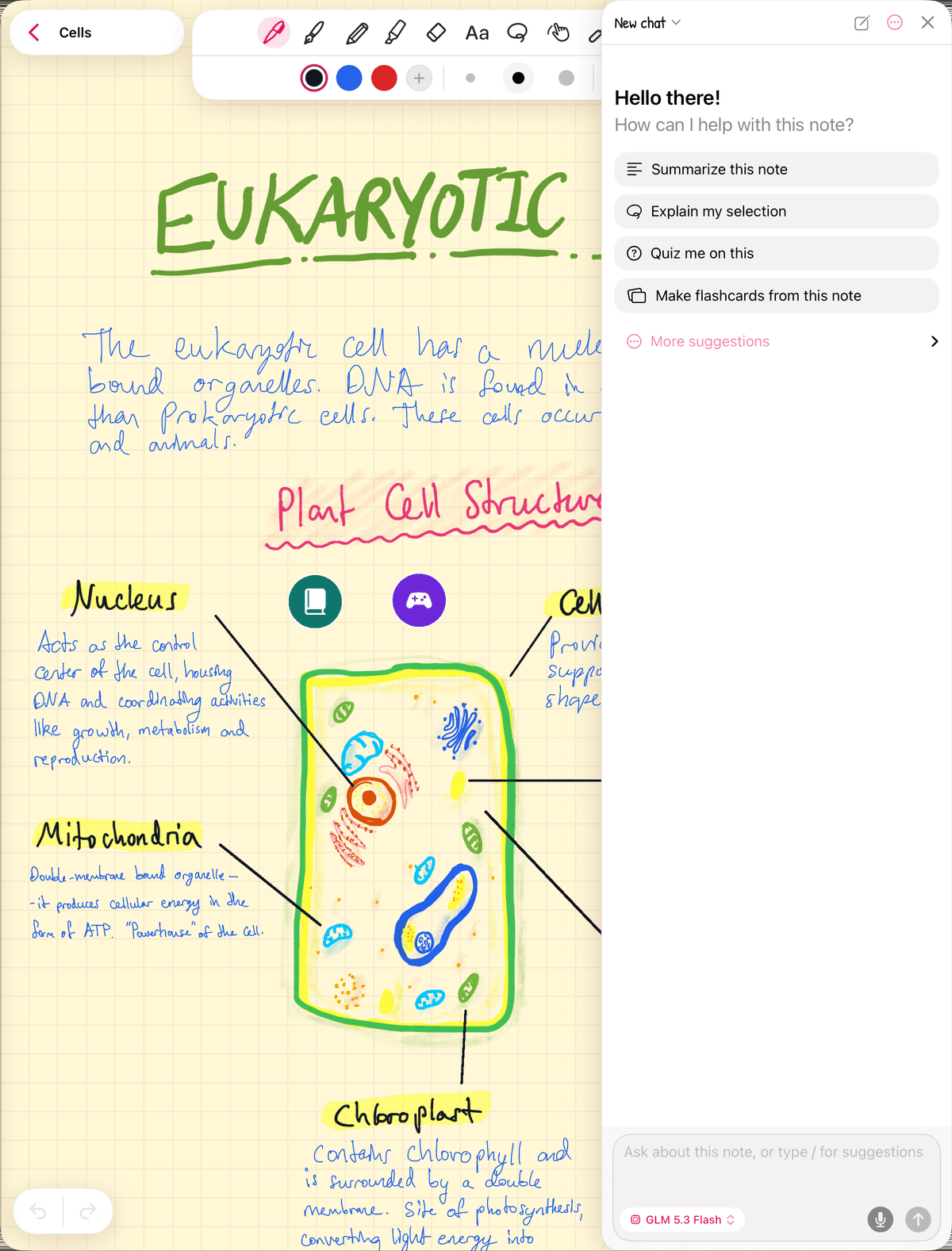
Yes. Lasso the section you want to be tested on and tap Ask AI, or open the assistant on the whole note. Then ask it to quiz you; there's a Quiz me on this starter. It writes a quiz from your notes, opens it beside the note, and puts a small green checklist shortcut on the note so you can take it again later.
The questions come in seven types, from multiple choice and true/false to fill in the blank, matching and putting steps in order. Nothing is marked until you tap Check, and then you see why the answer is right. At the end, Retry missed gives you only the ones you got wrong.
Making a quiz uses AI credits (you get starter credits when you sign in with Apple or Google) or your own OpenRouter key. Taking a quiz you already have is free. Give the questions a quick look against your notes: AI sometimes skips the detail your lecturer stressed.
What about a blank page?
This one needs no app at all, and it's what the 2006 students did: a blank sheet, no notes, no feedback.
- Pick one topic, like one lecture or one diagram.
- Close your notes and write down everything you can remember about it.
- Open your notes and compare. Fill the gaps in a different color.
- Tomorrow, do it again with the gaps.
You can do the same thing on your existing notes. Pick the Tape tool and lay a strip over each definition. Say the answer, then tap the strip to see through it, and tap again to cover it. When you're done, Peel takes the tape off.
Is rereading ever useful?
Yes, in two places. Read once to understand a topic you don't get yet; you can't recall what never made sense. And reread right after you miss something, because now you know exactly which part to look at.
Use rereading to understand, and active recall to remember. For the night before an exam, that looks like this:
- Read each topic once, slowly.
- Close your notes and test yourself: cards, a quiz, or a blank page.
- Reopen your notes only for what you missed.
- Test yourself again. If you have more than one night, spread it out.
You may feel less ready while you do it, because missing answers is uncomfortable. That's fine. In the 2006 study, the students who felt less sure than the rereaders remembered more a week later.
Sources
- Roediger, H. L., & Karpicke, J. D. (2006). Test-enhanced learning: Taking memory tests improves long-term retention. Psychological Science, 17(3), 249–255.
- Karpicke, J. D., & Roediger, H. L. (2008). The critical importance of retrieval for learning. Science, 319(5865), 966–968.
- Dunlosky, J., Rawson, K. A., Marsh, E. J., Nathan, M. J., & Willingham, D. T. (2013). Improving students' learning with effective learning techniques. Psychological Science in the Public Interest, 14(1).