The SQ3R Method: How to Read a Textbook and Remember It
The SQ3R method in five steps (Survey, Question, Read, Recite, Review), a worked example, and how to do it on iPad with your own textbook PDF.
You read the whole chapter. You highlighted half of it. Then you turn the page and... nothing stayed. The SQ3R method fixes that with five steps: Survey, Question, Read, Recite, Review. You read with questions in mind, then answer them without looking. Francis P. Robinson described it in his 1941 book Effective Study.
It's slower than just reading, and that's on purpose: you check yourself as you go, instead of finding the gaps the night before the exam.
What are the 5 steps of the SQ3R method?
- Survey. Before you read a word, skim the chapter: the title, the headings, the bold words, the pictures and the summary at the end. A few minutes is enough. You're building a map, not learning yet.
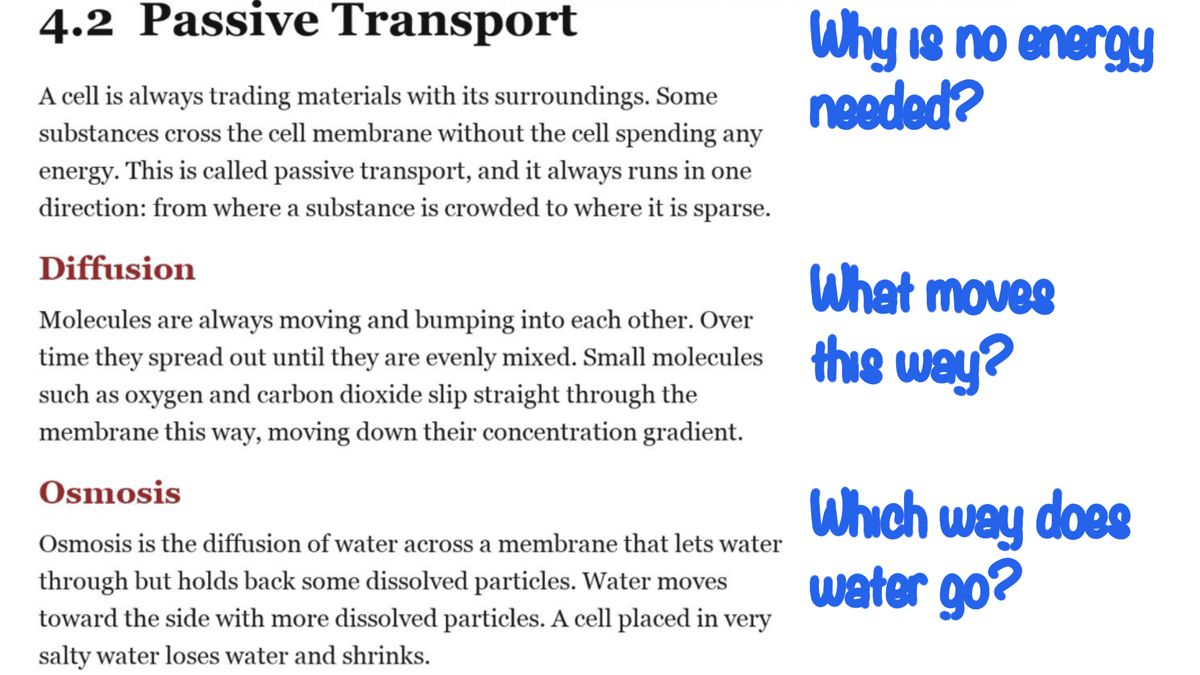
- Question. Turn every heading into a question and write it down. "Osmosis" becomes "Which way does water go?" Now you're reading to find something, not just reading.
- Read. Read one section at a time and look for the answer to its question.
- Recite. Cover the text and answer the question in your own words, out loud or on paper. If you can't, read that section again.
- Review. When you finish the chapter, go back over all the questions. Then do it again a few days later, and again before the exam.
Recite is the step most people skip. Don't skip it. Reading feels like learning. Answering without looking shows you what you actually know.
An SQ3R example: one textbook page
Here's a page about passive transport from an intro biology chapter. It has three headings: Diffusion, Osmosis and Facilitated Diffusion.
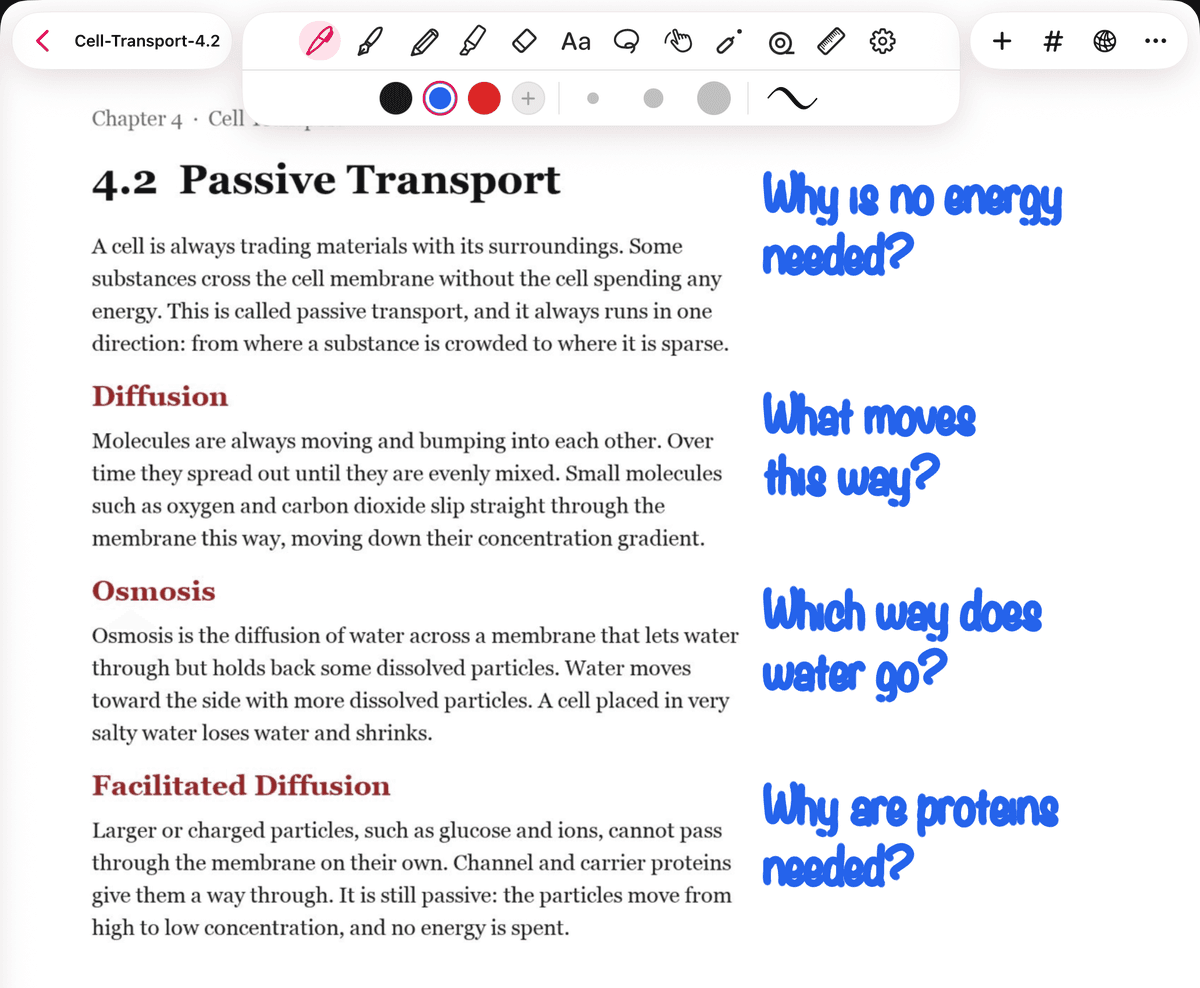
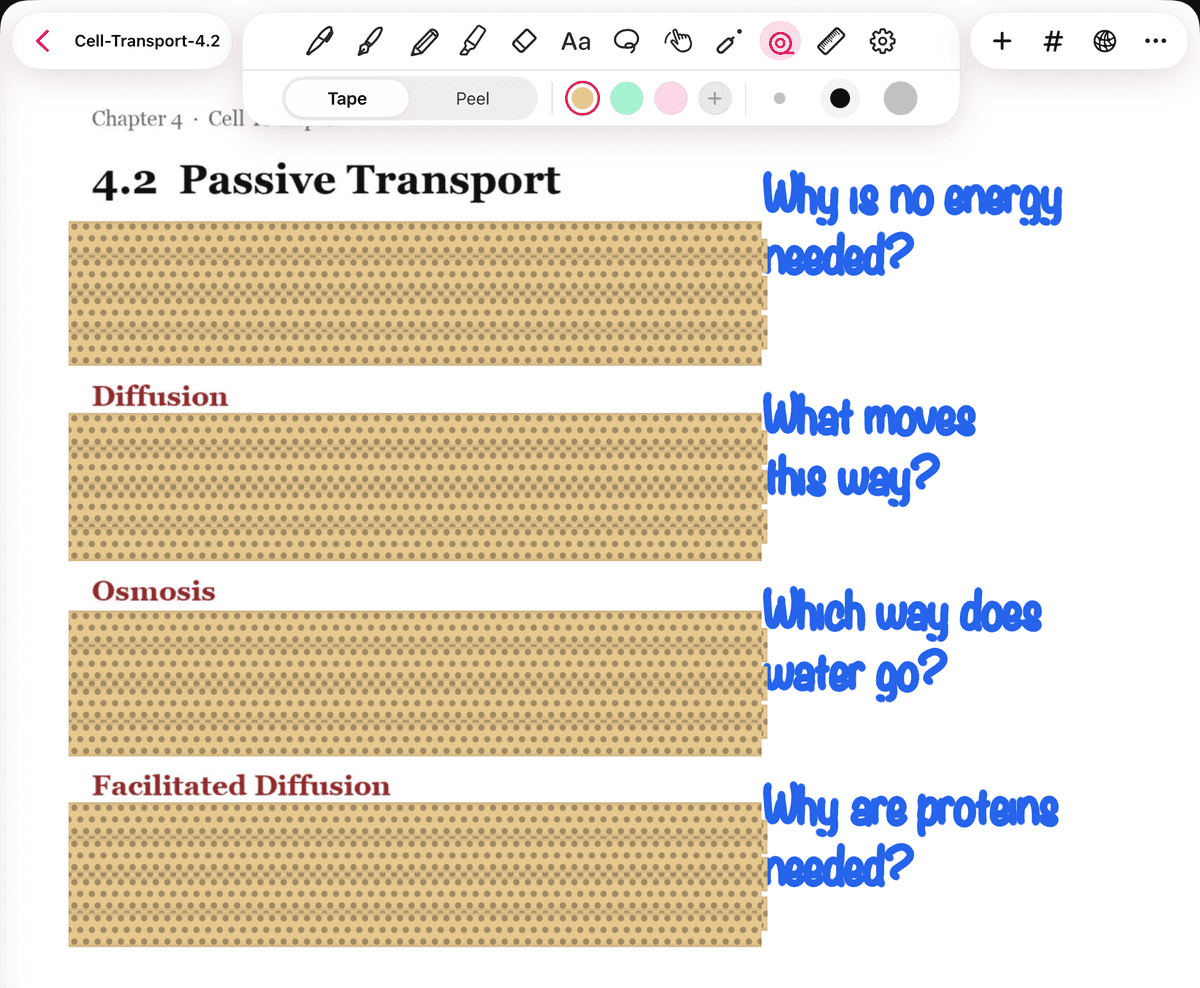
Survey: it's about how things cross a cell membrane without the cell spending energy. Question: each heading becomes a question in the margin, plus one for the section title. Read: read Diffusion and find that small molecules such as oxygen and carbon dioxide slip straight through the membrane. That answers "What moves this way?" Recite: tape over the paragraph and say it back in your own words.
How do you do SQ3R on iPad?
You can do every step on the textbook itself, with no second notebook to keep track of.
- Bring the chapter in. In the library, tap + New → Import and pick the PDF. The pages become a note you can write on. Got a paper textbook? Use + New → Scan.
- Write your questions in the margin with Apple Pencil, next to each heading.
- Recite with Tape. Pick the Tape tool and draw strips over the paragraphs. Now only your questions show. Answer each one out loud or on paper, then tap the strip to peek through it and check.
Tape turns any textbook page into a quiz, and checking an answer takes one tap. (Switch to Peel to remove a strip.)
How do you review so it sticks?
Two ways to make review easy:
- Flashcards for the questions you missed. Write the answer under the question, lasso the answer and tap Edit → Create Flashcard. Your handwriting goes on the back; write the question on the front. The app brings each card back right before you'd forget it. Here's how to turn handwritten notes into flashcards.
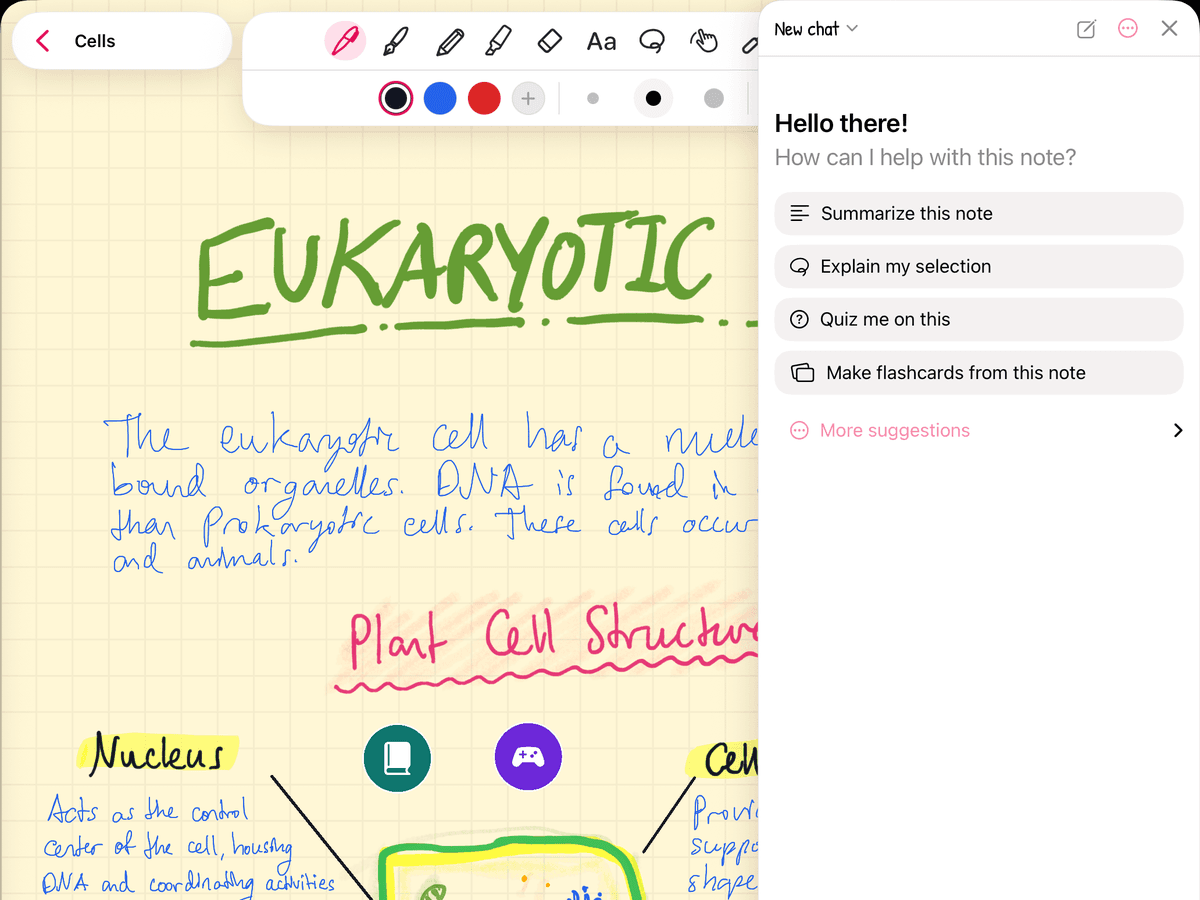
- Let AI quiz you on the chapter. Tap the AI button and pick Quiz me on this. AI is optional and uses credits, or your own OpenRouter key.
Is the SQ3R method effective?
Lots of study guides teach SQ3R, but the university pages we read don't point to studies of SQ3R itself. The University of York even lists the obvious downside: it's "time-consuming".
The step to keep, though, is Recite. Answering from memory, instead of reading again, is called active recall. Here's why testing yourself beats rereading, with the research behind it.
So if you're short on time, don't drop Recite. Shorten Survey instead. And if you like Recite, try the blurting method: close the book and write down everything you remember about the whole chapter.